
Introduction
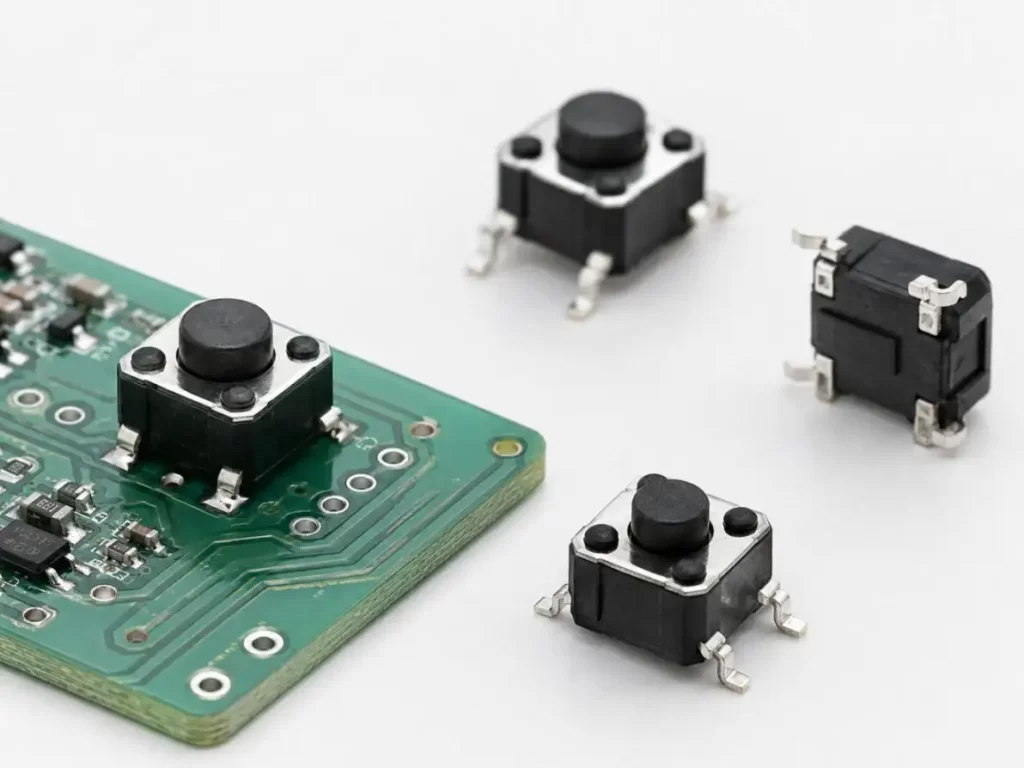
Micro switches play an important role in the reliable operation of modern home appliances. Although these components are small, they perform essential functions such as position detection, status feedback, and safety interlocking. From detecting microwave oven door closures and washing machine lid positions to controlling internal mechanisms in coffee machines and ice makers, micro switches help appliances operate safely and efficiently.
A home appliance micro switch is not limited to one specific design. Different household appliances require different switching solutions depending on their mechanical structures, electrical requirements, and operating environments. Some applications require moisture protection, while others need precise movement detection or reliable door interlocking.
Choosing the right micro switch involves evaluating several factors, including installation dimensions, actuator type, operating force, electrical ratings, and environmental conditions.
This article explores the top five micro switch types commonly used in home appliances, their applications, and the important factors manufacturers should consider when selecting the right solution.
What Makes a Micro Switch Suitable for Home Appliances?
Selecting the right micro switch requires an understanding of how an appliance operates and where the component will be installed. A suitable switch must fit the available installation space, respond accurately to mechanical movement, and meet the electrical requirements of the device.
Before choosing a switch, manufacturers should consider three important factors:
- Installation Dimensions and Mounting: The switch dimensions and mounting arrangement must match the appliance’s internal structure.
- Actuator Design: The actuator determines how the switch receives mechanical input from moving components.
- Electrical and Environmental Requirements: The switch must support the required electrical load and withstand the environmental conditions inside the appliance.
Considering these factors helps manufacturers identify a suitable switching solution and reduce potential problems during product assembly and operation.
Understand the Detection Function Before Selecting a Switch
Micro switches perform several important functions in household appliances. Identifying the required function helps engineers determine which switch design is most appropriate.
The three common detection functions include:
- Position Detection: Identifies whether a component, such as a refrigerator door or washing machine lid, has reached a particular position.
- Safety Interlocking: Monitors safety-related conditions, such as whether a microwave oven door is properly closed.
- Travel or Stroke Detection: Sends an electrical signal to the control system when a moving component reaches a predefined position.
Each function involves different mechanical and electrical requirements. Therefore, manufacturers should identify the purpose of the switch before deciding on a particular model.
Top 5 Best Micro Switch Types for Home Appliances
Different household appliances require different switching mechanisms. The following five types are commonly considered for home appliance projects based on their operating functions and installation requirements.
1. Basic Micro Switches for General Position Detection
Basic micro switches are widely used for general position detection and status feedback in home appliances. They operate through an internal contact mechanism that changes electrical states when the actuator reaches its operating point.
These switches are suitable for applications that require clear and consistent electrical on/off signals. Their straightforward operating mechanism makes them useful for detecting the positions of moving appliance components.
When selecting basic micro switches, manufacturers should evaluate the following specifications:
- Contact Configuration: Common options include SPST, SPDT, and DPDT. The selected configuration should match the appliance’s circuit design.
- Operating Force: The required force should match the movement of the external mechanical component.
- Installation Environment: Basic switches are generally more appropriate for clean and relatively dry locations.
- Mechanical Compatibility: The switch should operate without putting excessive pressure on plastic brackets, door mechanisms, or other moving components.
For applications exposed to continuous moisture or dust, a sealed alternative may provide better protection.
2. Sealed Micro Switches for Moisture and Dust Protection
Sealed micro switches are designed for home appliances where moisture, condensation, or dust may affect normal switch operation. They are particularly useful in equipment such as washing machines, coffee machines, ice makers, and humidifiers.
Their construction incorporates protective sealing around relevant areas of the housing, actuator, and connection points. This helps reduce the possibility of contaminants entering the internal switching mechanism.
Several specifications should be checked when selecting sealed micro switches:
- Ingress Protection Rating: The IP rating should match the expected level of moisture and dust exposure.
- Operating Temperature: The switch must withstand the temperature conditions of its installation location.
- Mounting Orientation: Installation should follow the product’s recommended mounting arrangement.
- Actuator Performance: The actuator must provide reliable switching under the expected mechanical conditions.
Manufacturers should always review the product datasheet and relevant testing results before selecting a sealed switch for a particular appliance.
3. Door Interlock Switches for Appliance Safety
Door interlock switches are important components in appliances that require door-status monitoring and associated safety control. They are commonly considered for microwave ovens and washing machines.
These switches work through a mechanical connection between the appliance door, its latch, and the switch actuator. When the door opens or closes, the associated mechanism changes the contact state, allowing the control system to identify the door’s position.
For reliable operation, manufacturers should pay attention to several design considerations:
- Mechanical Alignment: The switch must be installed in the correct position relative to the door mechanism.
- Latch Compatibility: The door latch should engage the actuator through the intended mechanical path.
- Contact Configuration: The electrical contacts must meet the requirements of the appliance’s control circuit.
- Operating Sequence: The switching sequence should match the appliance’s intended interlocking design.
Incorrect positioning can prevent the switch from activating properly, even when the door appears to be fully closed. Therefore, mechanical alignment and functional testing are essential during product development.
4. Plunger Micro Switches for Direct Linear Movement
Plunger micro switches are suitable for applications where a moving component applies direct pressure to the switch through a defined linear movement.
Unlike lever-operated designs, these switches receive mechanical input through a plunger that moves when external pressure is applied. This makes them useful for appliance mechanisms where the direction and travel of the moving component are relatively straightforward.
When choosing a plunger micro switch, manufacturers should evaluate:
- Actuation Direction: The external force should be applied in the direction recommended by the manufacturer.
- Operating Travel: The available movement must be sufficient to activate the switch reliably.
- Operating Force: The required force should be compatible with the appliance’s mechanical system.
- Overtravel Protection: Excessive pressure should be avoided to prevent unnecessary stress on the plunger mechanism.
An excessively high operating force can increase resistance in the moving mechanism, while insufficient force may result in unintended or unreliable switching.
5. Compact Limit Switches for Defined Travel-End Detection
Compact limit switches are designed to detect when a moving mechanism reaches a specific position or the end of its available travel.
In home appliances, these switches can be considered for mechanisms that require accurate travel-end detection. Their housing, actuator, and mounting arrangement must work correctly with the external mechanical structure.
Important selection considerations include:
- Travel Detection: The switch should activate at the intended endpoint of the moving mechanism.
- Actuator Compatibility: The actuator design must match the direction and movement of the external component.
- Mounting Structure: The switch should fit securely within the available installation space.
- Operating Stability: Repeated mechanical activation should remain within the switch’s specified operating limits.
For simple position detection, a basic micro switch may be sufficient. Compact limit switches are more appropriate when a particular mounting arrangement or defined travel-end detection function is required.
Which Micro Switch Type Is Best for Different Home Appliances?
The most suitable micro switch depends on the appliance’s mechanical design, operating environment, and required detection function. Different household appliances use switching components for different purposes.
Microwave Ovens: Door Interlocking and Position Detection
Microwave ovens use micro switches to monitor door positions and support door interlocking systems. When the door opens or closes, the door hook and associated bracket interact with the switch actuator, changing the electrical contact state.
For these applications, manufacturers must distinguish between switches used for door-status feedback and those incorporated into safety interlocking systems.
The mechanical structure, actuator position, contact configuration, and switching sequence should all be evaluated to ensure the component operates according to the appliance’s intended safety design.
Washing Machines: Lid Detection and Repeated Mechanical Operation
Washing machines commonly use micro switches for lid detection, door-status feedback, and internal mechanism positioning.
When the washing machine lid closes, a mechanical bracket activates the switch. Opening the lid releases the actuator, allowing the control system to recognize the change in position.
Since washing machines experience vibration and moisture during normal operation, manufacturers should carefully assess the switch’s mounting arrangement and sealing requirements.
Coffee Machines and Ice Makers: Compact Installation and Environmental Protection
Coffee machines and ice makers often have limited internal installation space. Micro switches are used near movable covers, water-related mechanisms, and internal transmission components.
Their selection requires attention to both mechanical compatibility and environmental exposure.
Coffee Machines
Coffee machines generate hot water and steam during operation. Therefore, switches installed near steam pathways should be evaluated for temperature resistance and moisture protection.
Ice Makers
Ice makers contain mechanisms associated with water supply, ice formation, and ice harvesting. Micro switches provide position feedback when specific components reach their required operating positions.
Refrigerators and Other Household Appliances: Door and Mechanism Detection
Refrigerators commonly use door switches to identify whether the door is open or closed. These switches may also control the interior lighting system.
Other household appliances, including electric drying racks and air purifiers, use switches to detect the positions of moving components.
The actuator should match the mechanical movement involved. For example, a plunger-style actuator may be suitable for direct linear movement, whereas lever or roller-style actuators may be more appropriate for mechanisms following a different movement path.
How to Choose the Right Micro Switch for a Home Appliance Project
Selecting a suitable micro switch involves more than comparing product dimensions or electrical ratings. Manufacturers should evaluate the complete application to ensure the selected component performs reliably throughout the appliance’s operating cycle.
The following considerations can help simplify the selection process.
1. Identify the Required Function
Determine whether the switch is needed for position detection, door interlocking, or travel-end detection. This helps narrow down the appropriate switch category.
2. Check Electrical Specifications
Review the required voltage, current, contact configuration, and electrical load. The selected switch should operate within its specified electrical ratings.
3. Evaluate Mechanical Requirements
Consider operating force, actuator movement, travel distance, and mounting dimensions. These factors directly influence switching accuracy and mechanical compatibility.
4. Consider Environmental Conditions
Identify whether the switch will be exposed to moisture, condensation, dust, vibration, or elevated temperatures. Sealing and temperature requirements should be assessed according to the installation location.
5. Conduct Practical Testing
Manufacturers should test sample switches within the actual appliance assembly. Repeated-operation testing helps identify potential alignment, actuation, and installation problems before mass production.
Conclusion
Choosing the right micro switch for home appliances requires a clear understanding of the application’s mechanical, electrical, and environmental requirements.
Basic micro switches are suitable for general position detection, while sealed micro switches provide additional protection against moisture and contamination. Door interlock switches support door-status monitoring and associated safety controls, plunger micro switches handle direct linear movement, and compact limit switches are useful for defined travel-end detection.
For appliance manufacturers, evaluating installation dimensions, actuator design, operating force, electrical ratings, and environmental conditions can help identify a suitable switching solution.
Hanxia can be considered when evaluating micro switch solutions for home appliance applications. By assessing the appliance’s installation space, mechanical movement, electrical requirements, and operating environment, manufacturers can identify suitable components for products such as microwave ovens, washing machines, coffee machines, and ice makers.
 johnie07
 cartobike
 toylorharrisuk