
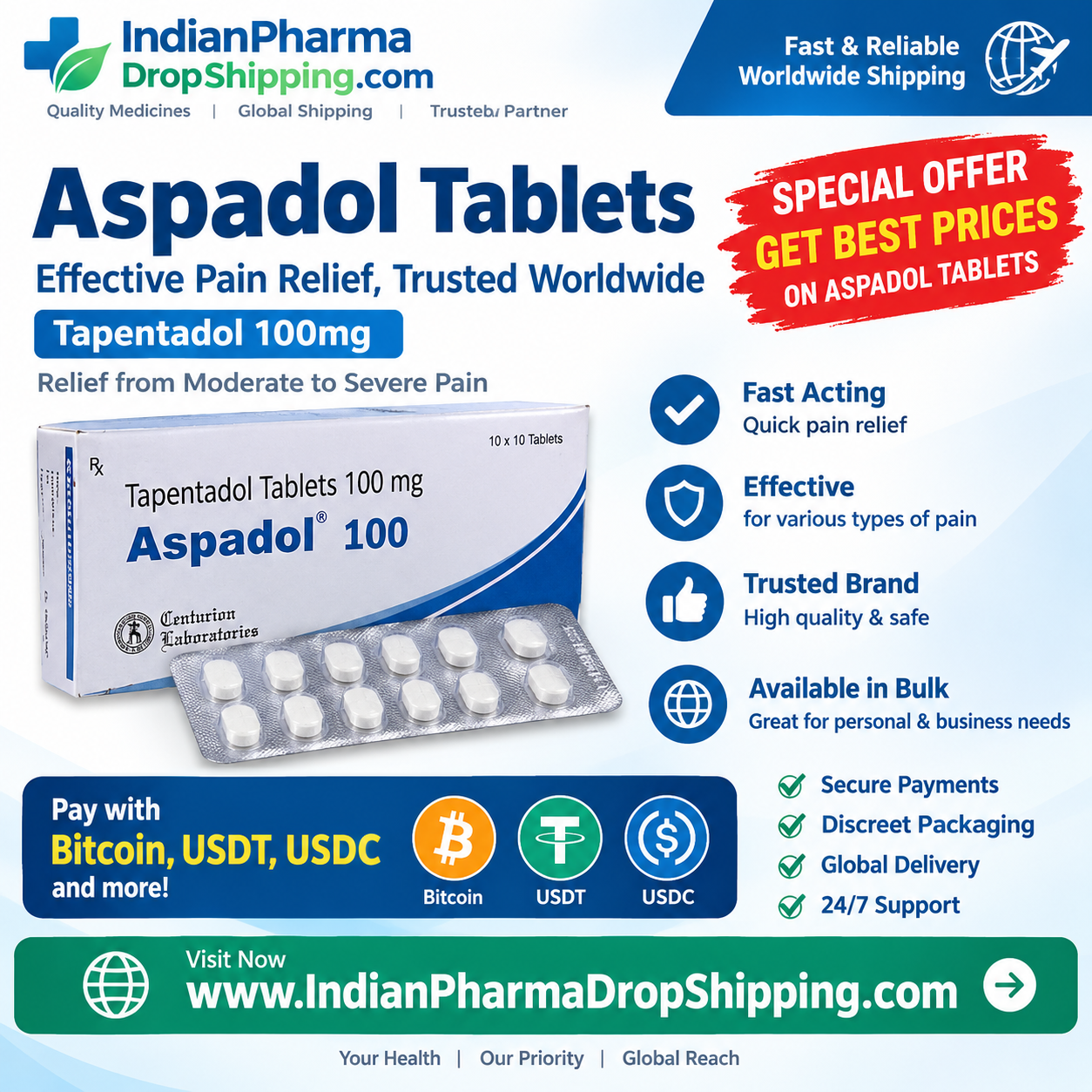
Aspadol 100mg Tablet for the Treatment of Calf Pain: Uses, Benefits and Safety Guide
Introduction
Calf pain can affect walking, exercise, sleep, and everyday activities. It may develop after muscle strain, sports injuries, nerve problems, or circulation disorders. Aspadol 100mg contains tapentadol, an opioid pain medicine prescribed for certain types of moderate to severe pain. However, it is not a routine treatment for ordinary calf pain. Understanding its uses, limitations, risks, and alternatives can help patients make informed decisions with their healthcare professionals.
Key Takeaways
- Aspadol 100mg contains tapentadol, an opioid analgesic.
- It may be prescribed for certain types of severe pain.
- It is not a first-line treatment for ordinary muscle soreness or calf strain.
- Calf pain can have muscular, neurological, joint-related, or vascular causes.
- Sudden calf swelling, warmth, and redness may indicate a blood clot.
- Tapentadol can cause dependence, sedation, and respiratory depression.
- The medicine should only be used under appropriate medical supervision.
- Safer treatment options may include physiotherapy, rest, and condition-specific medicines.
Understanding Aspadol 100mg Tablet
Aspadol 100mg is a medicine containing tapentadol as its active ingredient. Tapentadol belongs to a class of medicines known as opioid analgesics.
It works through two main mechanisms. First, it activates mu-opioid receptors in the central nervous system. Second, it inhibits noradrenaline reuptake. These actions help reduce the transmission and perception of pain signals.
Aspadol tablets may be prescribed for certain moderate to severe pain conditions when other treatments are insufficient or unsuitable.
However, the medicine is not appropriate for every type of pain. A medical assessment is needed before its use.
The 100mg strength should not be assumed to be suitable for every patient. The correct formulation, dose, and treatment duration must be determined by a qualified prescriber.
What Causes Calf Pain?
The calf is made up of muscles, tendons, blood vessels, and nerves. These structures work together to support walking, running, jumping, and standing.
Pain can develop when one or more of these structures become irritated or damaged.
1. Calf Muscle Strain
A calf strain occurs when muscle fibres are stretched beyond their normal capacity or become torn.
It is common among runners, athletes, and people who suddenly increase physical activity.
Typical symptoms include localised pain, tenderness, stiffness, and difficulty walking. More serious injuries may cause bruising and swelling.
Mild strains are usually managed through activity modification and rehabilitation rather than opioid medication.
2. Achilles Tendon Problems
The Achilles tendon connects the calf muscles to the heel bone.
Overuse, sudden movements, and repetitive loading can cause tendon irritation. Pain may develop near the back of the ankle or lower calf.
Morning stiffness and discomfort during walking are common symptoms.
Treatment may include activity modification, appropriate footwear, and physiotherapy.
3. Nerve-Related Calf Pain
Nerve irritation can cause burning, tingling, shooting pain, or numbness.
Conditions affecting the lower back may also produce pain that travels down the leg.
In some cases, peripheral neuropathy can affect the feet and lower legs. Diabetes is one possible cause.
Aspadol for neuropathic pain may be considered in selected clinical situations, but it should not be assumed to be the appropriate treatment for every nerve-related condition.
4. Circulation Problems
Blood circulation problems can also cause calf discomfort.
Peripheral artery disease may produce pain during walking that improves with rest. A deep vein thrombosis (DVT), on the other hand, can cause swelling, warmth, tenderness, and pain in one leg.
A suspected blood clot requires urgent medical assessment. It should never be treated by simply taking a painkiller.
Aspadol 100mg Tablet for the Treatment of Calf Pain
Aspadol 100mg may be considered when severe pain requires opioid treatment and other suitable options have proved inadequate.
However, calf pain has several possible causes. The correct treatment depends on the underlying diagnosis.
For example, a person experiencing mild calf soreness after exercise may benefit from rest and gradual stretching. Someone with a serious muscle tear may require a different rehabilitation programme.
In contrast, severe pain associated with a complex medical condition may require prescription pain management.
Tapentadol is not a substitute for investigating the cause of calf pain. Pain suppression alone does not repair injured muscles, tendons, or ligaments.
Patients should therefore receive a proper assessment before an opioid medicine is considered.
Aspadol 100mg for Acute Pain and Surgery Pain
Acute pain develops suddenly and is generally associated with an injury, illness, or medical procedure.
Examples include postoperative pain, serious injuries, and certain painful medical conditions.
Tapentadol may be prescribed for selected patients experiencing severe acute pain.
However, opioid treatment should be individualised. Non-opioid medicines and other pain-management methods may be sufficient for many patients.
Postoperative pain management may involve a combination of approaches, including prescribed medication, wound care, movement guidance, and rehabilitation.
The treatment plan should be reviewed regularly to reduce unnecessary opioid exposure.
Aspadol for Ankle Pain and Ankle Injuries
Ankle pain can develop after sprains, ligament injuries, fractures, tendon problems, and overuse.
An ankle sprain occurs when the supporting ligaments are stretched or torn. It commonly develops after the foot twists unexpectedly.
Symptoms can include:
- Pain around the ankle.
- Swelling and tenderness.
- Bruising.
- Reduced movement.
- Difficulty bearing weight.
The best painkiller for ankle injury depends on the severity and nature of the injury.
For many mild sprains, appropriate rest, ice wrapped in a cloth, compression, elevation, and gradual rehabilitation may be recommended.
A suspected fracture requires medical assessment and may need imaging.
Tapentadol for ankle pain is not generally a first-line approach. Its potential risks must be weighed against the expected benefits.
Aspadol for Back Pain, Knee Pain and Joint Pain
Aspadol 100mg may also be discussed in the context of severe back pain, knee pain, and other musculoskeletal conditions.
However, these conditions have different causes.
Back pain may result from muscle strain, disc problems, spinal stenosis, or nerve compression. Knee pain may be related to osteoarthritis, ligament damage, cartilage injuries, or inflammation.
Treatment should address the underlying problem.
For example, a person with uncomplicated lower back pain may benefit from remaining active within comfortable limits, physiotherapy, and appropriate non-opioid treatment.
A patient with persistent or severe pain may require further investigation.
Aspadol for joint pain should therefore only be considered following an individual clinical assessment.
Aspadol for Neuropathic Pain
Neuropathic pain develops when nerves become damaged or dysfunctional.
It may feel different from ordinary muscle pain. Patients sometimes describe it as burning, electric shocks, pins and needles, or shooting discomfort.
Common causes include diabetic neuropathy, nerve compression, spinal disorders, and certain injuries.
Tapentadol has mechanisms that may provide pain relief in selected neuropathic pain conditions. Nevertheless, treatment choices depend on the diagnosis and the patient’s medical history.
Other medicines may be considered for nerve pain, including certain antidepressants and anticonvulsants.
Physiotherapy and management of the underlying condition may also form part of treatment.
Understanding Tapentadol 100mg
Tapentadol 100mg is a prescription opioid medicine. It should only be used in the formulation and manner prescribed by a healthcare professional.
It is important to distinguish immediate-release and prolonged-release formulations. They are designed for different clinical purposes and should not be substituted for one another without medical advice.
Patients should never crush, split, or alter a modified-release tablet unless the specific product information explicitly permits it.
The prescribed treatment should also be reviewed if pain continues, worsens, or changes character.
Increasing the amount independently can cause serious harm.
Potential Side Effects of Aspadol Tablets
Like other opioid medicines, tapentadol can cause adverse effects.
Commonly reported effects include:
- Nausea.
- Vomiting.
- Dizziness.
- Sleepiness.
- Headache.
- Constipation.
- Dry mouth.
- Sweating.
These effects may affect daily activities, driving, and the ability to operate machinery.
More serious reactions can include respiratory depression, severe allergic reactions, seizures, and dangerously reduced consciousness.
The risk of breathing problems increases when tapentadol is combined with alcohol, sedatives, benzodiazepines, sleeping tablets, or other opioids.
If someone develops slow or difficult breathing, cannot be awakened, or becomes severely confused, emergency medical assistance is required. Naloxone may be used in opioid overdose where available.
Who Should Avoid Tapentadol?
Tapentadol is not suitable for everyone.
A healthcare professional should be informed about existing medical conditions and all current medicines.
Particular caution is required for people with:
- Respiratory disorders.
- Severe liver or kidney problems.
- A history of substance-use disorders.
- Seizure disorders.
- Head injuries.
- Certain mental health conditions.
- Medicines that affect serotonin levels.
- A history of opioid sensitivity.
Tapentadol can interact with other medicines. Combining it with alcohol or other central nervous system depressants can increase sedation and breathing risks.
It should never be shared with another person, even when similar pain symptoms are experienced.
Dependence, Tolerance and Responsible Opioid Use
One of the most important considerations with Aspadol pain medicine is its potential for dependence.
Repeated opioid exposure can cause physical dependence. Tolerance may also develop, meaning that the same amount produces less effect over time.
This does not mean that every patient will develop addiction. However, the possibility must be understood before treatment begins.
Patients should follow the prescribed treatment plan and attend recommended reviews.
If opioid treatment has been used regularly, it should not be stopped suddenly without medical advice. A supervised reduction may be needed to minimise withdrawal symptoms.
Safe storage is equally important. The medicine should be kept away from children and other people who may accidentally or intentionally take it.
Unused tablets should be disposed of through an appropriate medicine-return programme.
Treatment Options for Calf Pain Without Opioids
Many calf pain conditions can be managed without opioid medication.
The best approach depends on the diagnosis.
Rest and Activity Modification
Temporary reduction of painful activities may help irritated muscles recover.
However, prolonged inactivity is not usually beneficial for uncomplicated muscle injuries. A gradual return to normal movement is often encouraged.
Cold Therapy
Cold packs wrapped in a cloth may help reduce discomfort after an acute injury.
They should not be applied directly to the skin. People with circulation or sensation problems should seek professional advice before using cold therapy.
Physiotherapy
Physiotherapy can help restore strength, flexibility, balance, and movement.
A rehabilitation programme may include calf strengthening, ankle mobility exercises, and gradual loading.
The exercises should be adjusted to the injury and stage of recovery.
Non-Opioid Pain Relief
Depending on the diagnosis and medical history, a healthcare professional may recommend paracetamol or a non-steroidal anti-inflammatory drug (NSAID).
These medicines have their own precautions and are not suitable for everyone.
For example, some NSAIDs may be unsuitable for people with stomach ulcers, kidney disease, certain cardiovascular conditions, or particular medication interactions.
Aspadol 100mg and Online Pharmacy Safety in the USA, UK and Australia
People searching for Aspadol online, Tapentadol online, or online pain relief medication should understand that tapentadol is a controlled prescription medicine in several countries.
Its legal status and dispensing requirements differ by jurisdiction.
USA
In the United States, tapentadol is a Schedule II controlled substance.
Patients should obtain it through appropriate medical and pharmacy channels. Searches such as Aspadol Tablet USA and buy painkillers online USA should not replace verification of the medicine’s legal status and supplier.
UK
In the United Kingdom, tapentadol is a controlled prescription medicine.
Patients should follow the applicable prescribing and dispensing requirements. Online pharmacy services should be checked for proper authorisation.
Australia
In Australia, tapentadol is a prescription-only controlled medicine.
Its supply is subject to applicable state, territory, and federal requirements.
Patients in Sydney, Melbourne, Brisbane, Perth, and Adelaide should consult an appropriate healthcare professional before considering treatment.
Europe
Medicine regulations differ across European countries.
Patients in London, Paris, Berlin, Madrid, Rome, Amsterdam, Dublin, and other cities should follow their local prescription requirements.
An overseas website advertising Aspadol does not establish that the product can legally be supplied in a particular country.
How to Evaluate Online Pain Medication Services
Online healthcare services can provide convenient access to consultations and prescription management.
However, convenience should not replace medicine safety.
Before using an online pharmacy, check whether it:
- Provides verifiable business and pharmacy details.
- Uses appropriately qualified healthcare professionals.
- Requires a valid prescription where legally required.
- Identifies the medicine’s manufacturer.
- Provides clear medicine information.
- Explains storage and delivery procedures.
- Offers appropriate pharmacist support.
Be cautious of websites promising prescription opioids without a medical assessment.
Claims involving cheap Aspadol tablets, Aspadol discounts, Aspadol deals, bulk orders, wholesale suppliers, and cryptocurrency payments do not establish medicine quality or legal authorisation.
Bitcoin, USDT, and other cryptocurrency payment options should never be treated as evidence of pharmacy legitimacy.
Prescription medicines should be obtained only through lawful and appropriately regulated channels.
Frequently Asked Questions
Can Aspadol 100mg Be Used for Calf Pain?
It may be considered in selected cases of severe pain when an appropriate prescriber determines that opioid treatment is necessary. It is not a routine treatment for ordinary calf muscle soreness.
Is Tapentadol Effective for Ankle Pain?
Tapentadol can relieve certain types of severe pain. However, ankle injuries usually require treatment directed at the underlying injury, such as rehabilitation, appropriate pain management, or fracture care.
Is Aspadol Suitable for Neuropathic Pain?
Tapentadol has a role in selected neuropathic pain conditions. Its suitability depends on the diagnosis, treatment history, and individual risk factors.
Can Aspadol Be Used for Back Pain?
It may be prescribed in selected cases of severe pain. However, opioid medicines are not routinely recommended as first-line treatment for uncomplicated back pain.
Is Tapentadol Stronger Than Ordinary Painkillers?
Tapentadol is an opioid analgesic and has different effects and risks from common non-opioid pain medicines. Its use requires careful assessment and supervision.
Can Aspadol Cause Dependence?
Yes. Tapentadol can cause physical dependence, tolerance, and addiction. The risk should be discussed with the prescriber before treatment.
What Should Be Done If Calf Pain Is Accompanied by Swelling?
Sudden swelling, warmth, redness, or tenderness in one calf requires urgent medical assessment because a deep vein thrombosis may be present. Chest pain or breathlessness alongside these symptoms requires emergency assistance.
Choosing the Right Treatment for Calf Pain
Calf pain should never be treated as a single condition because its causes can vary considerably. Muscle strains, tendon injuries, nerve disorders, and circulation problems require different approaches.
Aspadol 100mg contains tapentadol, an opioid medicine that may be prescribed for selected cases of moderate to severe pain. However, its potential benefits must be balanced against dependence, sedation, overdose, and respiratory risks.
For ordinary calf and ankle injuries, appropriate diagnosis, activity modification, physiotherapy, and suitable non-opioid treatments may be more appropriate.
Patients experiencing persistent or severe symptoms should seek medical assessment rather than relying on online painkiller recommendations. Safe pain management begins with identifying the cause and selecting treatment that addresses the condition without creating unnecessary risks.
 genericwellness
 geopharmarx