
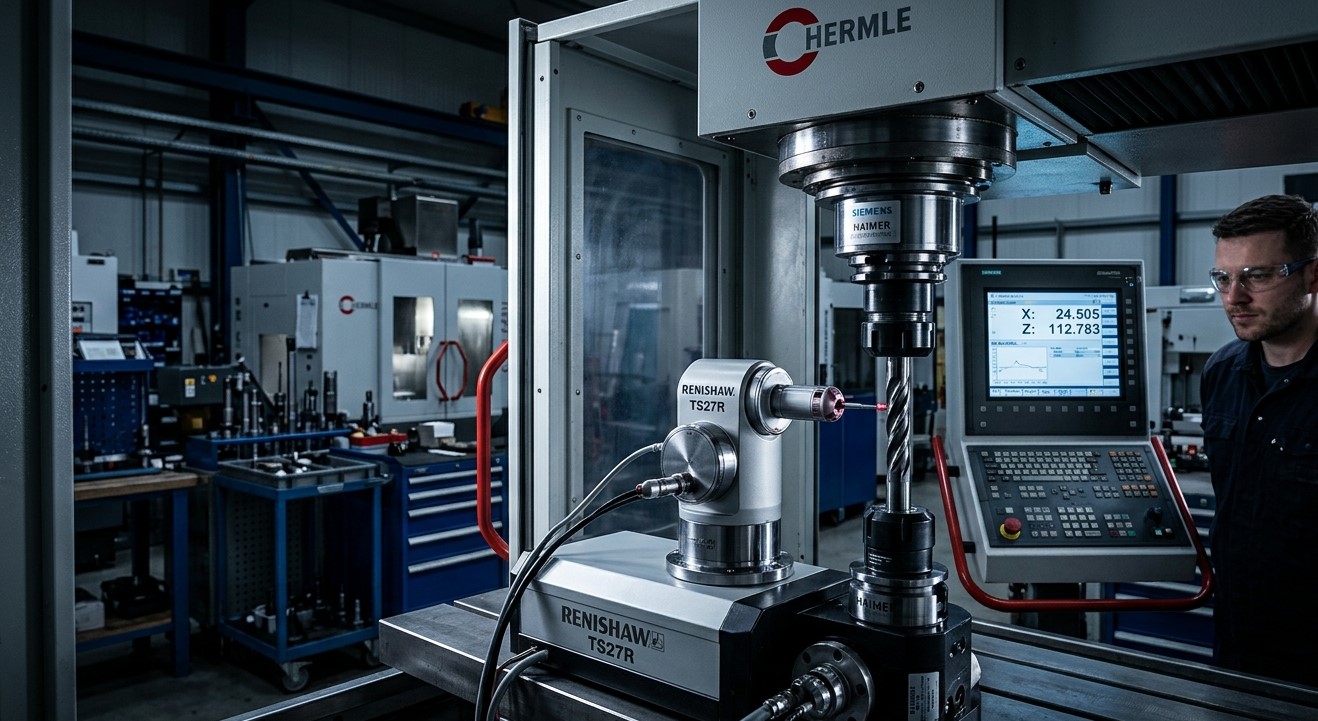
In modern manufacturing, productivity depends on machining accuracy, efficient machine operation, and reduced downtime. One of the common challenges in CNC machining is measuring cutting tools and entering the correct tool offsets before production begins. Manual measurement can take time and may introduce errors that affect the finished component.
CNC tool setters help solve this problem by measuring cutting tool dimensions and supporting accurate tool offset settings. Depending on the system, they can also help identify tool wear or breakage, reducing unnecessary interruptions during production.
For businesses looking to improve machining efficiency, understanding tool setter technology is essential. Khokhawala Trading LLC, an Industrial Tools Supplier in Dubai, recognises the importance of reliable industrial tooling and measurement solutions for modern manufacturing operations.
This article explains how CNC tool setters work, how they reduce setup time, and what manufacturers should consider when selecting a suitable system.
Table of Contents
- What Is a CNC Tool Setter?
- How Does a CNC Tool Setter Work?
- How Do CNC Tool Setters Reduce Setup Time?
- How Do Tool Setters Improve Productivity?
- Types of CNC Tool Setters
- Key Benefits of Using CNC Tool Setters
- How to Choose the Right CNC Tool Setter
- Common Mistakes to Avoid
- Frequently Asked Questions
- Conclusion and Call to Action
1. What Is a CNC Tool Setter?
A CNC tool setter is a measuring device that determines the position and dimensions of a cutting tool so the CNC machine can use accurate tool offset information. Depending on its design, it may measure tool length, tool diameter, or changes in tool geometry.
CNC machines rely on accurate tool data to position cutting edges correctly relative to the workpiece. If a tool offset is incorrect, the machine may cut too deeply, leave excess material, or produce components outside the required tolerances.
Tool setters can be installed inside a CNC machine or used as external tool presetting equipment. Their primary purpose is to make tool measurement more consistent and efficient.
Why Is Tool Measurement Important?
Accurate tool measurement helps manufacturers:
- Maintain consistent component dimensions.
- Reduce manual measurement and data-entry errors.
- Shorten machine setup procedures.
- Improve repeatability between production runs.
- Identify certain tool wear or breakage conditions when supported by the system.
2. How Does a CNC Tool Setter Work?
A CNC tool setter measures a cutting tool using a contact-based sensor or, in some systems, a non-contact measuring technology such as a laser.
In a typical automated setup, the machine moves the tool to a defined measuring position. The sensor detects the tool’s position or cutting edge, and the system calculates the relevant offset. Depending on the machine configuration, the result can be transferred automatically to the CNC controller.
Step-by-Step Working Process
- Prepare the tool: Install the cutting tool correctly in its compatible toolholder.
- Position the tool: Move the tool to the designated measuring location using the approved machine procedure.
- Measure the tool: The sensor detects the tool’s length or other supported dimensions.
- Calculate the offset: The CNC system uses the measurement to determine the required tool offset.
- Update tool data: The controller records the measurement when automatic offset updating is configured.
- Verify the result: Confirm that the tool data is correct before starting the machining cycle.
The exact procedure varies by machine, controller, and tool setter model. Correct calibration and safe operating procedures are essential for reliable results.
3. How Do CNC Tool Setters Reduce Setup Time?
Tool setters reduce setup time by automating tasks that would otherwise require repeated manual measurement, calculations, and data entry.
Faster Tool Length Measurement
Measuring each tool manually can involve additional equipment and repeated operator checks. An integrated tool setter measures compatible tools using a consistent procedure, helping reduce the time required to prepare a CNC machine.
This is particularly useful when a machining program requires several drills, end mills, reamers, or other cutting tools.
Reduced Manual Data Entry
Manual measurement often requires operators to read a value and enter it into the machine controller. Incorrect readings or data-entry mistakes can delay production.
When the tool setter is integrated with the CNC control, supported measurements can be transferred automatically. This reduces manual handling and helps maintain consistent tool offset records.
Quicker Tool Replacement
When a worn or damaged cutting tool needs replacement, its dimensions may differ from those of the original tool. Measuring the replacement tool and updating its offset helps the machine return to production with less manual adjustment.
Less Trial-and-Error Machining
Incorrect offsets may lead to test cuts, repeated adjustments, and additional inspection. Accurate tool measurement reduces the likelihood of these avoidable steps, although other setup checks may still be necessary.
4. How Do Tool Setters Improve Productivity?
Reducing setup time is only one way tool setters support productivity. They can also improve process consistency and help prevent certain machining interruptions.
Improved Dimensional Accuracy
Correct tool offsets help the CNC machine position cutting edges as intended. This supports consistent dimensions and reduces errors caused by incorrect tool measurements.
Early Detection of Tool Breakage
Some tool setter systems can check tools during production and detect certain broken or unexpectedly shortened tools. When integrated with suitable machine logic, the system can trigger an alarm or stop the process before further machining occurs.
This can help prevent damaged workpieces, wasted material, and additional tool damage.
Better Tool Wear Monitoring
Certain systems can measure changes in tool dimensions or position to support wear monitoring. Timely inspection and offset adjustments can help maintain part quality, provided the system is designed for the relevant measurement task.
More Consistent Production
Automated measurement reduces variation caused by different manual measurement methods. This is valuable when several operators work on the same machine or when a manufacturer repeats the same production job.
Increased Machine Availability
When tool preparation and measurement become faster, the machine can spend less time waiting for setup tasks. In some workshops, external tool presetters provide an additional advantage by allowing tools to be measured while the CNC machine continues running.
5. Types of CNC Tool Setters
Different tool setting systems are designed for different machining environments and measurement requirements.
Contact-Based Tool Setters
Contact-based systems measure a tool when it touches a sensor surface or trigger mechanism. They are commonly used for tool length measurement and, with suitable designs and procedures, other dimensional checks.
Best suited for: Workshops seeking repeatable tool measurement and automated offset setting.
Non-Contact Laser Tool Setters
Laser systems measure compatible tools without physically touching the cutting edges. Depending on their configuration, they can measure tool length and diameter and check certain tool conditions.
Best suited for: Applications requiring frequent measurements, delicate cutting edges, or advanced tool monitoring.
External Tool Presetters
External presetters measure tools outside the CNC machine. The operator prepares the toolholder assembly, measures the tool, and transfers the resulting data to the machine using the available workflow.
Best suited for: Production environments where keeping the spindle available for machining is a priority.
Integrated Automatic Tool Setters
Integrated systems are installed within or near the machine and work with the CNC controller to automate supported measurement routines.
Best suited for: Workshops that frequently change tools and want to standardise setup procedures.
6. Key Benefits of Using CNC Tool Setters
The main benefits include:
- Reduced setup time: Faster tool measurement and fewer manual steps.
- Improved repeatability: More consistent measurements across tools and operators.
- Fewer offset errors: Reduced dependence on manual readings and data entry.
- Lower scrap and rework risk: Better tool data helps prevent some machining errors.
- Improved tool monitoring: Supported systems can detect certain wear or breakage conditions.
- More efficient tool changes: Replacement tools can be measured and prepared more consistently.
- Better machine utilisation: Less time spent on non-cutting setup tasks can increase productive machine availability.
The actual savings depend on tool-change frequency, production volume, operator workflow, equipment integration, and the accuracy requirements of the job.
7. How to Choose the Right CNC Tool Setter
Before investing in a tool setter, consider these important factors.
Machine and Controller Compatibility
Check whether the tool setter supports your CNC machine, controller, signal interface, and required measurement routines.
Measurement Requirements
Determine whether you need tool length measurement, diameter measurement, breakage detection, wear monitoring, or several functions together.
Accuracy and Repeatability
Review the manufacturer’s specifications and confirm that the system meets your machining tolerances and production requirements.
Contact or Non-Contact Technology
Contact-based systems can be suitable for many standard tool measurement tasks. Laser systems may offer advantages for certain delicate tools or advanced monitoring applications.
Integration and Data Transfer
Consider whether measurements can be transferred automatically to the tool offset table or whether operators must enter the data manually.
Maintenance and Calibration
Check calibration requirements, cleaning procedures, replacement parts, and the availability of technical support.
8. Common Mistakes to Avoid
Even a high-quality tool setter may deliver unreliable results if it is used incorrectly. Avoid these common mistakes:
- Failing to calibrate the system according to manufacturer instructions.
- Measuring tools with damaged or contaminated cutting edges.
- Using incompatible toolholders or incorrect measuring procedures.
- Entering incorrect tool numbers or offset values.
- Ignoring sensor cleanliness and routine maintenance.
- Assuming every tool setter can detect all types of tool wear or breakage.
- Starting production without verifying critical tool offsets and machine clearances.
Proper training and regular inspection help ensure that tool setting automation delivers reliable results.
9. Frequently Asked Questions
Q1. What is the main purpose of a CNC tool setter?
Its main purpose is to measure cutting tool dimensions or position and provide the information needed for accurate tool offset settings.
Q2. How does a CNC tool setter reduce setup time?
It automates or simplifies tool measurement, reduces manual data entry, and helps operators prepare tools more quickly and consistently.
Q3. Can a CNC tool setter measure tool diameter?
Some systems can measure tool diameter as well as length. The available functions depend on the sensor technology and machine configuration.
Q4. Can tool setters detect broken cutting tools?
Some systems include tool breakage detection routines. Their effectiveness depends on the tool setter’s design, the tool geometry, and the programmed inspection procedure.
Q5. What is the difference between a tool setter and a tool presetter?
A machine-mounted tool setter generally measures tools at or within the CNC machine. An external tool presetter measures tools away from the machine, allowing preparation to take place while the machine is available for production.
Q6. Do all CNC machines need a tool setter?
No. The value depends on production volume, tool-change frequency, setup complexity, accuracy requirements, and available operator time. Manual measurement may remain practical for some applications.
Q7. How often should a CNC tool setter be calibrated?
Follow the equipment manufacturer’s recommendations and your workshop’s quality procedures. Calibration or verification may also be needed after maintenance, a collision, or suspected measurement inconsistency.
10. Conclusion and Call to Action
CNC tool setters help manufacturers reduce setup time, improve measurement consistency, and support more reliable machining operations. By automating tool measurement and, where supported, checking for wear or breakage, they can reduce manual errors and help limit unnecessary downtime.
Choosing the right system requires careful consideration of machine compatibility, measurement requirements, accuracy, integration, and maintenance needs. When properly implemented, tool setting technology can contribute to better productivity and more consistent component quality.
Khokhawala Trading LLC supports businesses seeking industrial tooling solutions for demanding machining applications. If you are looking for an Industrial Tools Supplier in Dubai, evaluate your workshop’s tooling and measurement requirements to identify solutions that support efficient production.
Contact Khokhawala Trading LLC to discuss your industrial tooling requirements and find suitable solutions for your machining operations.
 Danish006
  hindustan228