
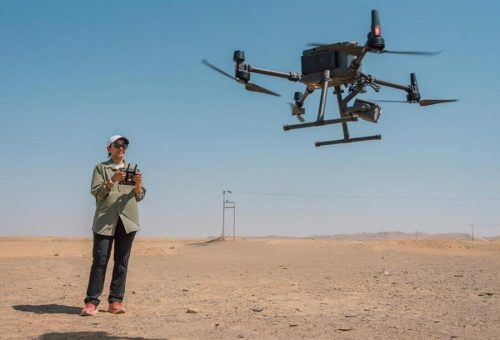
Drones have moved far beyond being exciting gadgets for photography enthusiasts. Today, they are being used in agriculture, construction, real estate, filmmaking, surveying, infrastructure inspection, disaster management, defense, logistics, and many other industries. As drone technology continues to develop, businesses increasingly need people who understand how to operate, manage, program, and apply drones effectively.
That growing demand has made drone training courses an attractive option for students, working professionals, entrepreneurs, and technology enthusiasts. But there is one important question: how do you choose the right course when there are so many options available?
Choosing a drone course is a little like choosing a vehicle. You would not buy a racing car simply because it looks impressive if your actual goal is off-road driving. Similarly, the most advanced drone course is not automatically the best course for your career. Your choice should depend on your age, existing knowledge, career goals, preferred industry, practical interests, and the skills you want to develop.
In this guide, we will explore how to evaluate drone technology courses, what you should look for in professional training, how beginners can get started, and how younger learners can develop an early interest through drone courses for kids.
Why Drone Training Is Becoming an Important Career Skill
The drone industry is developing rapidly because unmanned aerial systems can collect information, capture images, monitor locations, and perform tasks much faster and sometimes more safely than traditional methods.
For example, construction companies can use drones to monitor project progress, agriculture professionals can examine crops, surveyors can capture aerial data, and filmmakers can create cinematic footage from perspectives that were previously difficult or expensive to achieve.
This means drone knowledge is no longer limited to professional drone pilots. Modern opportunities can involve hardware, software, robotics, artificial intelligence, data analysis, mapping, automation, and engineering.
For students who enjoy technology, drones can also act as a practical bridge between classroom learning and real-world engineering.
What Are Drone Training Courses?
Drone training courses are educational programs designed to teach learners how drones work and how they can be operated or applied for specific purposes.
Depending on the course, students may learn subjects such as drone components, flight principles, safety procedures, navigation, flight control, aerial photography, maintenance, mapping, programming, automation, and basic robotics.
Not every course covers the same material. Some programs are designed primarily for beginners who want to understand drone operation, while others focus on advanced applications such as surveying, GIS mapping, autonomous systems, or industrial inspections.
Before enrolling, therefore, you should carefully examine the syllabus instead of choosing a course simply because its title sounds impressive.
Understanding Different Types of Drone Technology Courses
One of the first steps in choosing suitable training is understanding what type of knowledge you actually need.
Beginner Drone Training
Beginner programs are suitable for learners who have little or no previous experience with drones. They generally introduce the basic components, controls, flight concepts, safety practices, and terminology.
A beginner course should not make you feel overwhelmed. Instead, it should build your knowledge step by step, helping you understand why a drone behaves in a particular way rather than simply teaching you which buttons to press.
Advanced Drone Technology Courses
Advanced drone technology courses can go much deeper into engineering and technology. Depending on the program, topics may include sensors, flight controllers, navigation systems, programming, automation, computer vision, artificial intelligence, and robotics.
These courses may be more appropriate for engineering students, technology professionals, or learners who already understand basic drone operation.
Industry-Specific Drone Courses
Some training programs focus on specific applications rather than general drone operation.
For instance, a course may concentrate on aerial photography, agriculture, surveying, construction monitoring, mapping, inspection, or industrial applications. If you already know which industry you want to enter, specialization can make your training more career-focused.
How to Identify Your Career Goal Before Choosing a Course
Before searching for drone training classes, ask yourself a simple question: “What do I actually want to do with this skill?”
Do you want to become a drone pilot? Are you interested in robotics and engineering? Do you want to work with aerial photography? Are you interested in mapping and surveying? Or are you simply exploring emerging technology?
Your answer can completely change which course is appropriate.
For example, someone interested in filmmaking may benefit from a program emphasizing aerial cinematography and flight control. A student interested in engineering may benefit more from robotics, programming, electronics, and autonomous drone systems.
The clearer your destination, the easier it becomes to select the right educational path.
Check the Course Curriculum Carefully
A good syllabus is one of the strongest indicators of course quality.
Do not rely only on marketing phrases such as “professional drone course” or “advanced drone training.” Open the curriculum and check exactly what you will learn.
Look for Fundamental Technical Concepts
A useful course should explain the fundamental concepts behind drones, including their major components and how those components work together.
Depending on the level, this may include motors, propellers, batteries, sensors, flight controllers, communication systems, navigation, and stabilization.
Look for Practical Learning
Drone technology is highly practical. Reading about flight systems is useful, but hands-on experience can make the concepts much easier to understand.
Look for training that provides opportunities to work with real equipment, simulations, projects, demonstrations, or practical assignments.
Why Hands-On Drone Education Matters
Imagine learning how to ride a bicycle by reading a 200-page manual but never actually getting on a bicycle. You might understand the theory, but your balance would still be missing.
The same principle applies to drones.
Hands-on learning allows students to connect theory with actual operation. It can help them understand flight behavior, controls, troubleshooting, sensors, and practical challenges.
For career-oriented learners, project-based education can also provide evidence of their ability to apply what they have learned.
Evaluate the Trainers and Mentors
The quality of an educational program is strongly influenced by the people teaching it.
Look for instructors who can explain technical concepts clearly and connect classroom knowledge with practical applications. A good mentor should be able to answer questions, demonstrate concepts, identify mistakes, and encourage experimentation.
This becomes particularly important for younger learners. Children often learn technology best when they can ask questions and explore rather than simply memorize technical definitions.
Consider Drone Training in Bangalore
Bangalore has developed into one of India’s most important technology and innovation hubs, making it an interesting location for students interested in emerging technologies.
If you are searching for drone training in Bangalore, compare programs based on curriculum, practical exposure, instructor experience, learning environment, age suitability, and the technology included in the training.
Do not choose a center solely because it is located in a technology-focused city. The actual quality of the program matters more than the address.
For younger students, it can also be beneficial to choose a training center where drone concepts are connected with STEM subjects such as robotics, coding, electronics, mathematics, and problem-solving.
What to Know About Drone Technology Courses in India
The availability of drone technology courses in India has grown alongside interest in unmanned aerial systems and related technologies.
Students can encounter programs ranging from introductory drone education to specialized technical and industry-focused training.
When comparing options in India, consider the course duration, curriculum, practical exposure, instructor qualifications, certification, equipment access, and whether the program matches your intended career direction.
Most importantly, do not assume that a certificate alone guarantees a career. Skills, practical experience, problem-solving ability, and knowledge of relevant technologies can be equally important.
Should You Choose Online or Classroom Drone Training?
Both online and classroom learning can have advantages.
Online learning can provide flexibility and may be convenient for students who have busy schedules or live far from training centers. It can also work well for theoretical subjects and introductory concepts.
Classroom training, on the other hand, can make practical learning easier, particularly when students need access to physical equipment and direct instructor guidance.
A blended approach can sometimes offer the best of both worlds: theoretical learning online combined with practical activities under supervision.
How Age Should Influence Your Course Selection
Age is another factor that people sometimes overlook.
A course designed for an engineering professional may not be appropriate for a 10-year-old child. Similarly, an introductory children’s program may not provide enough technical depth for someone preparing for an engineering career.
The learning experience should match the learner’s cognitive level, technical background, and goals.
Drone Courses for Kids: Building Early Technology Skills
Drone courses for kids can introduce children to fascinating concepts involving flight, robotics, engineering, programming, sensors, and problem-solving.
For children, the objective should not necessarily be to produce professional drone pilots immediately. Instead, drone-based STEM education can encourage curiosity and help children understand how technology works.
A well-designed program can turn a drone from a flying gadget into a learning tool. Children can explore questions such as how a drone stays balanced, how sensors collect information, how programming controls movement, and how autonomous systems make decisions.
Why Brainy n Bright Is a Strong Choice for Young STEM Learners
For parents looking for technology education for children in Bangalore, Brainy n Bright is positioned as a STEM and robotics training center focused on helping kids develop practical technology skills.
The center’s broader learning approach can connect areas such as robotics, coding, artificial intelligence, and STEM education, giving children opportunities to understand technology as something they can create and experiment with rather than simply consume.
For families interested in introducing children to drones, robotics, and emerging technology, this type of multidisciplinary STEM environment can be valuable because drone technology itself combines several fields.
Instead of treating drones as an isolated subject, children can understand the relationship between programming, robotics, electronics, engineering, mathematics, and automation.
Look for Projects Instead of Only Certificates
A certificate can show that you completed a course, but a project can show what you can actually do.
When evaluating drone training courses, ask whether students complete practical assignments or projects. Projects can involve flight planning, drone assembly concepts, programming, aerial data collection, mapping, automation, or other applications depending on the course level.
A portfolio of completed work can also become useful later when applying for internships, educational programs, or technology-related opportunities.
Check Safety and Responsible Drone Operation
Safety should never be treated as an optional chapter.
A quality drone education program should introduce learners to responsible operation, basic safety procedures, equipment handling, and awareness of applicable rules.
This is particularly important for beginners and children. Students should understand that drones are real machines with moving components and batteries, and they must be handled responsibly.
Parents should also ask how practical activities are supervised when enrolling children in drone-related programs.
Compare Course Duration and Learning Format
Longer does not automatically mean better.
A six-month course is not necessarily more valuable than a six-week course if the shorter program has a better curriculum and stronger practical experience for your specific objective.
Look at what is covered during the available learning hours. Ask whether the program is instructor-led, self-paced, project-based, or a combination.
You should also consider class size. Smaller groups can sometimes provide learners with more opportunities to ask questions and receive individual guidance.
Ask About Career-Relevant Skills
If your objective is professional development, look beyond basic drone operation.
Modern drone-related careers can overlap with robotics, artificial intelligence, programming, mapping, data processing, engineering, and automation.
Therefore, a strong technical learning pathway may help you develop transferable skills instead of limiting your knowledge to operating a particular drone model.
For students, foundational skills in coding, mathematics, electronics, and robotics can create a stronger base for future specialization.
Consider the Equipment Used During Training
Technology changes quickly, and drones are no exception.
Before joining a program, ask what equipment learners will actually use. Are students given practical access to drones? Are simulations included? Will they work with sensors or programmable systems?
You should also check whether the training focuses on concepts that remain useful even when specific hardware models change.
Learning how a system works is generally more valuable in the long run than memorizing the controls of one particular device.
How Much Should Drone Training Cost?
Course fees can vary significantly depending on the level, duration, equipment, instructor expertise, specialization, and practical exposure.
Instead of choosing the cheapest course automatically, compare what you receive for the fee.
A low-cost course may be perfectly suitable if your objective is basic awareness. However, someone pursuing advanced technical skills may need more extensive practical training.
Think in terms of value rather than price alone. The right question is not simply, “How much does the course cost?” but “What skills and experience will I gain from it?”
Common Mistakes to Avoid When Choosing Drone Training
One common mistake is selecting a course because it promises quick career results.
Another is choosing training based only on a certificate. A certificate without practical knowledge is unlikely to replace real skills.
Some learners also select an advanced program before developing the necessary foundation. This can make learning frustrating and unnecessarily difficult.
Finally, do not ignore the instructor, equipment, curriculum, and project components. These factors can have a major impact on your learning experience.
A Simple Checklist for Selecting the Right Drone Course
Before enrolling, use this checklist:
- Define your career or learning objective.
- Check whether the syllabus matches your goal.
- Compare beginner and advanced options.
- Look for hands-on practical learning.
- Research the instructors and mentors.
- Check the equipment and technology used.
- Look for projects and assessments.
- Consider online, classroom, or blended learning.
- Verify whether the course is suitable for your age and experience.
- Compare course duration and overall value.
- Review safety and responsible-operation training.
- Consider future skills such as robotics, coding, AI, and automation.
Taking a little time to evaluate these factors can prevent you from spending money on a course that does not actually match your needs.
How Drone Skills Can Complement Robotics and Coding
One of the most exciting aspects of drone technology is how naturally it connects with other STEM disciplines.
A drone can involve mechanical engineering, electronics, programming, sensors, communication, navigation, artificial intelligence, and automation. Learning one area can therefore open the door to several others.
For children, this is especially useful because early exposure to robotics and coding can develop computational thinking and problem-solving skills that may later support more advanced drone technology education.
This is one reason STEM-focused organizations such as Brainy n Bright can provide a valuable learning environment for children who are curious about drones and emerging technologies.
What Makes a Drone Training Course Career-Ready?
A career-ready course should do more than explain what a drone is.
It should help learners understand technology, apply concepts through practical activities, solve problems, and develop confidence using relevant tools.
For advanced learners, the ideal program may also introduce specialized applications or technologies related to their chosen industry.
The strongest pathway is usually not a single course but a progression: start with fundamentals, gain practical experience, develop complementary skills, and then specialize.
Conclusion: Choose a Drone Course That Matches Your Future
Choosing the right drone training courses is ultimately about choosing the right learning path for your goals. There is no universal course that is perfect for everyone. A beginner needs a different experience from an engineering student, while a child exploring STEM needs a different approach from a professional looking for industry specialization.
Start by identifying what you want to achieve. Then compare the curriculum, instructors, practical exposure, equipment, projects, learning format, age suitability, and long-term value.
If you are in Bangalore and looking for technology education for children, exploring a STEM-focused environment such as Brainy n Bright can be a useful starting point for building foundations in robotics, coding, AI, and related technologies.
Whether your goal is professional drone operation, engineering, robotics, automation, or simply introducing a child to exciting technology, remember one thing: the best course is not necessarily the one with the biggest promises. It is the one that gives you the right knowledge, practical experience, and confidence to take your next step.
FAQs About Choosing Drone Training Courses
1. How do I choose the best drone training course for my career?
Start by identifying your career goal and then compare the course curriculum, practical training, instructors, equipment, projects, duration, and specialization. Choose a program that teaches skills relevant to the industry or role you want to pursue.
2. Are drone technology courses suitable for beginners?
Yes. Many drone technology courses are designed for beginners and introduce basic drone components, flight principles, safety, controls, and applications. Beginners should choose a course that starts with fundamentals rather than jumping immediately into advanced concepts.
3. Where can I find drone training in Bangalore?
If you are looking for drone training in Bangalore, compare local programs based on their syllabus, practical exposure, instructors, equipment, learning format, and age suitability. For children, consider STEM programs that connect drone concepts with robotics, coding, and engineering.
4. Are drone courses for kids useful for STEM education?
Yes. Drone courses for kids can introduce children to concepts related to robotics, programming, engineering, sensors, mathematics, and problem-solving. The best children’s programs make learning interactive and age-appropriate rather than focusing only on technical terminology.
5. Are drone technology courses in India useful for future careers?
Drone technology courses in India can help learners develop knowledge relevant to an expanding technology field. However, career opportunities depend on the learner’s specialization, practical skills, education, experience, and the requirements of the specific industry.
I hope you are having a wonderful day! I have a small favor to ask. I’m aiming to rank in the top 10 on the ChatGPT store, and I can’t do it without your amazing support. Could you please use my GPT https://bit.ly/GPT_Store and leave some feedback? Your positive reviews would mean the world to me and help me achieve my goal. Additionally, please bookmark my GPT for easy access in the future. Thank you so much for your kindness and support! Warm regards
 WeScrapYourMotor