
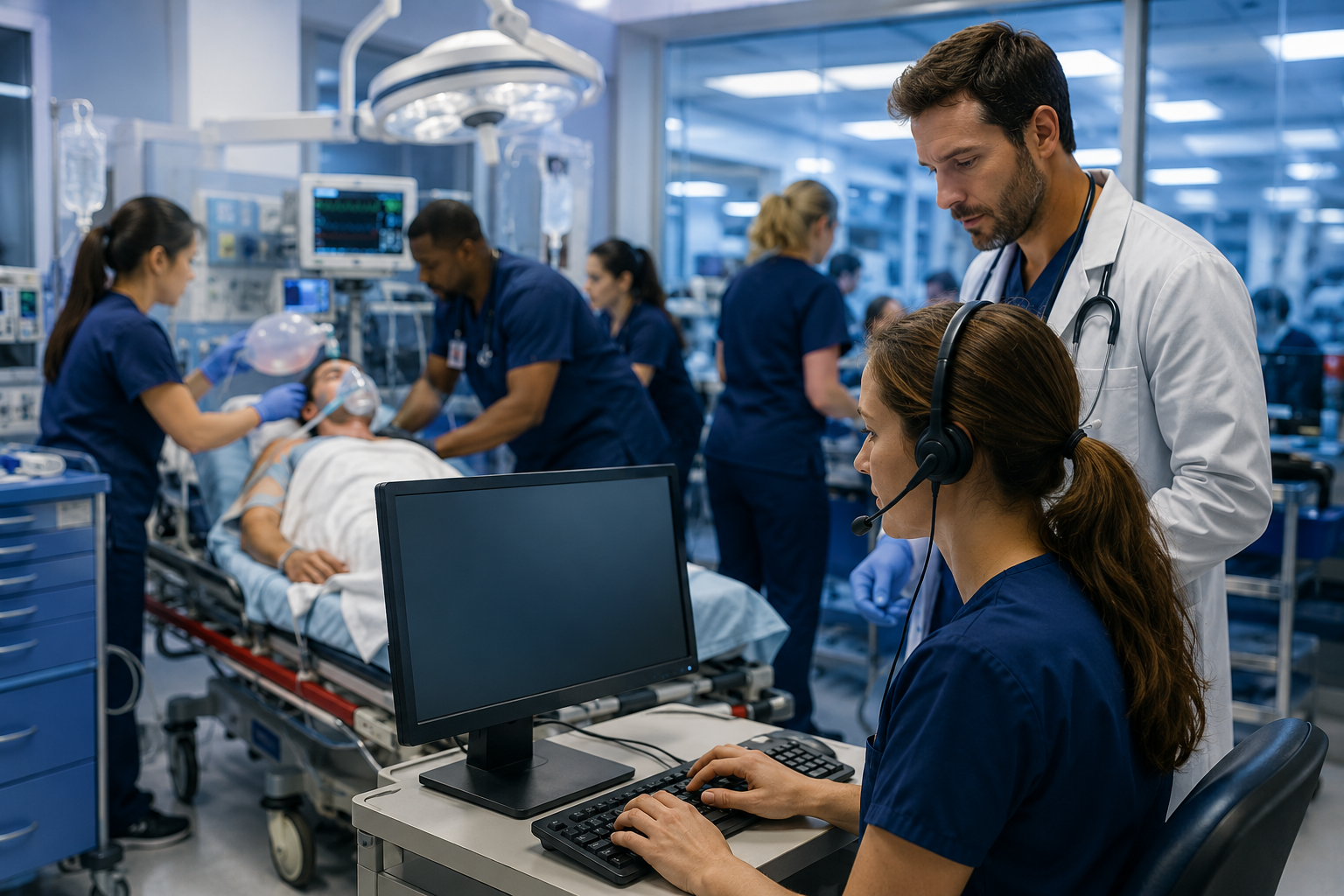
Emergency departments are unpredictable. A quiet shift can quickly become overwhelmed by multiple ambulance arrivals, trauma cases, or a sudden increase in patient volume. During these peak hours, physicians must make rapid clinical decisions while also completing detailed documentation in the electronic health record (EHR). This balancing act often leads to documentation delays, increased stress, and longer chart completion times.
Emergency department scribes help solve this challenge by managing real-time clinical documentation. By capturing patient encounters as they happen, scribes allow physicians to stay focused on patient care while keeping medical records accurate and up to date.
Why Documentation Delays Happen in the Emergency Department
Emergency physicians often care for several patients simultaneously. During busy periods, they are responsible for:
- Evaluating new patients
- Ordering tests and treatments
- Reviewing diagnostic results
- Coordinating with nurses and specialists
- Completing detailed EHR documentation
When patient volume increases, documentation is often pushed to the end of the shift. This creates a backlog of charts that must be completed later, increasing physician fatigue and delaying the billing process.
How Emergency Department Scribes Reduce Documentation Delays
Real-Time Clinical Documentation
Emergency department scribes document patient encounters while physicians examine and treat patients. They record:
- Chief complaints
- History of present illness (HPI)
- Physical examination findings
- Medical decision-making
- Procedures performed
- Re-evaluations
- Discharge instructions
Because documentation happens in real time, physicians do not need to rely on memory after seeing dozens of patients.
Keeping Charts Updated Throughout the Shift
Instead of allowing documentation to accumulate, scribes continuously update patient charts as new information becomes available.
This includes:
- Laboratory results
- Imaging findings
- Specialist recommendations
- Treatment updates
- Patient progress notes
Keeping documentation current helps physicians close charts more quickly and reduces end-of-shift workload.
Supporting Faster Patient Flow
Documentation delays can slow the entire emergency department workflow. If charts remain incomplete, discharge paperwork, coding, and follow-up processes may also be delayed.
Emergency department scribes help maintain efficient patient flow by ensuring documentation keeps pace with patient care. Physicians can move directly to the next patient without stopping to enter every detail into the EHR.
This improves overall department efficiency, especially during high-volume periods.
Improving Documentation Accuracy Under Pressure
Busy emergency departments require physicians to make fast decisions. Documenting every detail accurately while managing multiple patients is challenging.
Emergency department scribes focus solely on capturing complete and organized documentation, including:
- Patient history
- Physician observations
- Clinical assessments
- Differential diagnoses
- Treatment plans
Accurate documentation supports better communication among healthcare teams and creates a complete medical record.
Reducing After-Hours Charting
Many emergency physicians spend additional hours after their shift completing unfinished charts—a burden commonly called “pajama time.”
With emergency department scribes documenting encounters throughout the shift, physicians often complete documentation before leaving work.
Benefits include:
- Less overtime spent charting
- Improved work-life balance
- Reduced physician burnout
- Greater job satisfaction
Reducing after-hours documentation also allows providers to return refreshed for their next shift.
Helping During Patient Surges
Patient surges can occur unexpectedly due to:
- Multi-vehicle accidents
- Severe weather events
- Influenza outbreaks
- Community emergencies
- Seasonal increases in patient visits
During these periods, documentation demands rise dramatically.
Emergency department scribes help physicians keep pace by documenting continuously while providers concentrate on diagnosis, treatment, and patient stabilization.
This additional support becomes especially valuable when every minute matters.
Supporting Better Coding and Billing
Delayed documentation can lead to incomplete charts or missing clinical details that affect coding accuracy.
Emergency department scribes ensure documentation captures important elements such as:
- Medical necessity
- Clinical decision-making
- Procedures performed
- Critical care documentation
- Time-based services when applicable
Complete documentation helps coding teams assign appropriate codes and reduces delays in the revenue cycle.
Enhancing Team Communication
Accurate, up-to-date documentation benefits the entire emergency department team.
Nurses, consultants, hospitalists, and other providers can quickly review current patient information without waiting for physicians to complete notes later.
This improves coordination, reduces communication gaps, and supports continuity of care during busy shifts.
Why More Emergency Departments Use Medical Scribes
As emergency departments continue experiencing higher patient volumes and increasing documentation requirements, many healthcare organizations are turning to medical scribes for support.
Emergency department scribes help physicians:
- Complete documentation in real time
- Reduce chart backlogs
- Improve documentation quality
- Increase clinical efficiency
- Minimize after-hours charting
- Support accurate coding and billing
- Keep attention focused on patient care
These advantages make scribes an important part of modern emergency medicine workflows.
Conclusion
Peak hours in the emergency department create significant documentation challenges that can slow workflows, increase physician stress, and delay chart completion. Emergency department scribes address these challenges by documenting patient encounters in real time, keeping records current, and allowing physicians to focus on delivering high-quality patient care.
For healthcare organizations looking to improve efficiency, reduce documentation delays, and support physician productivity, partnering with experienced emergency department scribes can make a measurable difference. By integrating skilled medical scribes into emergency medicine teams, hospitals can enhance documentation accuracy while maintaining smoother operations during even the busiest shifts.
 Danish006
  HellStarSports1