
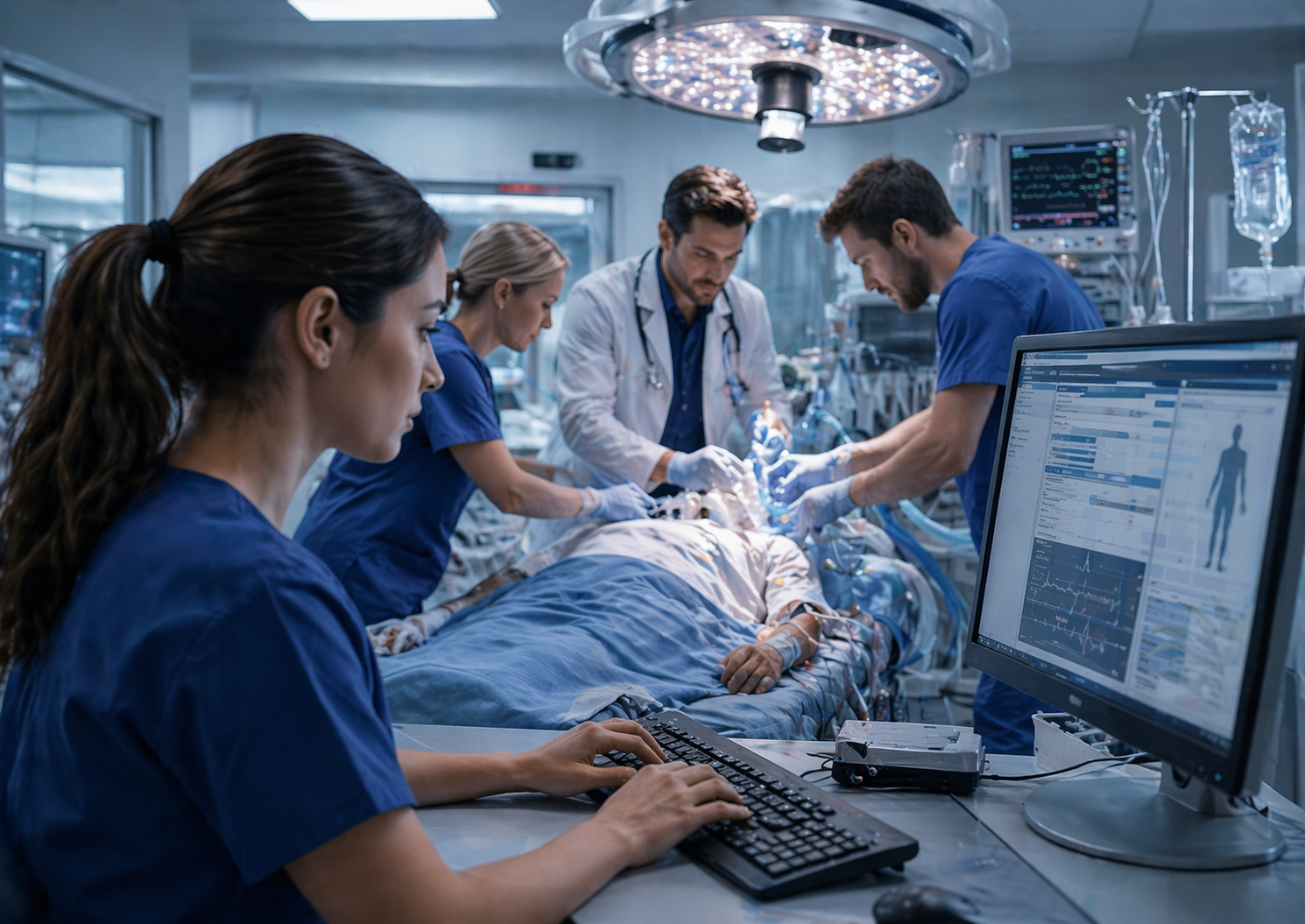
In the high-pressure environment of the emergency department (ED), every second matters. Physicians are required to make rapid, life-saving decisions while managing multiple patients, coordinating with care teams, and documenting every detail in the Electronic Health Record (EHR). During critical cases—such as trauma, cardiac arrest, or severe respiratory distress—the balance between patient care and documentation becomes even more challenging. This is where emergency medical scribes play a vital role.
Far beyond simple note-taking, emergency scribes act as real-time documentation specialists who support physicians during some of the most intense and complex moments in healthcare. Their presence helps ensure accuracy, efficiency, and focus when it matters most.
The Complexity of Critical Cases in the ED
Critical cases in the emergency department demand immediate attention and precise coordination. Physicians must quickly assess symptoms, interpret diagnostic results, initiate treatment, and often perform procedures—all within minutes. At the same time, they are responsible for documenting patient histories, physical exams, interventions, and outcomes.
This dual responsibility can create several challenges:
- Increased risk of incomplete or delayed documentation
- Reduced time for direct patient interaction
- Cognitive overload during high-stress situations
- Potential for errors in charting critical information
In such scenarios, even small documentation gaps can have significant consequences for patient care, legal compliance, and hospital operations.
Real-Time Documentation When It Matters Most
Emergency scribes are trained to document patient encounters as they happen. During critical cases, this real-time charting becomes invaluable.
As physicians focus on stabilizing the patient, the scribe captures:
- Presenting symptoms and initial assessments
- Vital signs and clinical observations
- Orders for labs, imaging, and medications
- Procedures performed and their outcomes
- Communication between care team members
By documenting events as they unfold, scribes ensure that no critical detail is missed. This not only improves the accuracy of the medical record but also eliminates the need for physicians to recall events later—reducing the likelihood of errors.
Enhancing Physician Focus and Performance
During life-threatening situations, a physician’s full attention should be on the patient—not on a computer screen. Emergency scribes help remove this distraction.
With a scribe managing the EHR, physicians can:
- Maintain continuous eye contact with patients and team members
- Respond more quickly to changes in patient condition
- Communicate more effectively with nurses and specialists
- Perform procedures without interruption
This enhanced focus can lead to faster decision-making and improved clinical outcomes, especially in time-sensitive emergencies.
Supporting Team Communication
Critical cases often involve a multidisciplinary team, including nurses, respiratory therapists, specialists, and technicians. Clear communication among team members is essential for coordinated care.
Emergency scribes help by:
- Recording verbal orders and ensuring they are accurately entered into the EHR
- Tracking the sequence of events during resuscitations or procedures
- Documenting consultations and recommendations from specialists
- Creating a clear timeline of care for future reference
This level of documentation provides a reliable record that supports both immediate care and post-case review.
Reducing Documentation Errors Under Pressure
High-stress environments increase the risk of documentation errors, especially when physicians must rely on memory after the fact. Emergency scribes significantly reduce this risk.
Because scribes document in real time, they:
- Capture precise details during rapidly evolving situations
- Ensure completeness of records for compliance and billing
- Minimize omissions that could impact patient safety
- Maintain consistency in documentation across cases
Accurate records are particularly important in critical cases, where documentation may be reviewed for legal, clinical, or quality assurance purposes.
Improving Efficiency After the Crisis
Once a critical case is stabilized, physicians often face a backlog of documentation. Without a scribe, this can lead to extended charting time, delayed discharges, and increased stress.
With a scribe:
- Charts are largely complete by the end of the encounter
- Physicians can move quickly to the next patient
- After-hours charting is significantly reduced
- Overall department throughput improves
This efficiency benefits not only physicians but also patients waiting for care.
Supporting Compliance and Quality Assurance
Emergency departments operate under strict regulatory and compliance requirements. Documentation must meet specific standards for coding, billing, and legal protection.
Emergency scribes help ensure that:
- All required elements of documentation are included
- Medical necessity is clearly established
- Procedures and interventions are properly recorded
- Records are audit-ready and defensible
In critical cases, where scrutiny may be higher, this level of accuracy is especially important.
The Human Element in High-Tech Care
While technology continues to evolve, the human element remains essential in emergency medicine. Medical scribes bring situational awareness, adaptability, and attention to detail that automated systems often lack.
They understand clinical workflows, anticipate physician needs, and adapt quickly to changing situations. This makes them a valuable extension of the care team, particularly during unpredictable and high-stakes emergencies.
The Future of Emergency Scribing in Critical Care
As emergency departments continue to face rising patient volumes and increasing complexity, the demand for efficient documentation solutions will only grow. Many healthcare organizations are now integrating virtual scribes and AI-assisted tools into their workflows.
However, even with these advancements, human scribes remain indispensable—especially during critical cases where nuance, speed, and accuracy are crucial.
Conclusion
Critical cases in the emergency department require precision, speed, and unwavering focus. Emergency medical scribes provide essential support by handling real-time documentation, reducing cognitive burden, and ensuring accurate records.
By allowing physicians to concentrate fully on patient care, scribes play a direct role in improving outcomes, enhancing efficiency, and maintaining high standards of documentation. In the most intense moments of emergency medicine, their contribution is not just helpful—it is vital.
 hindustan228