
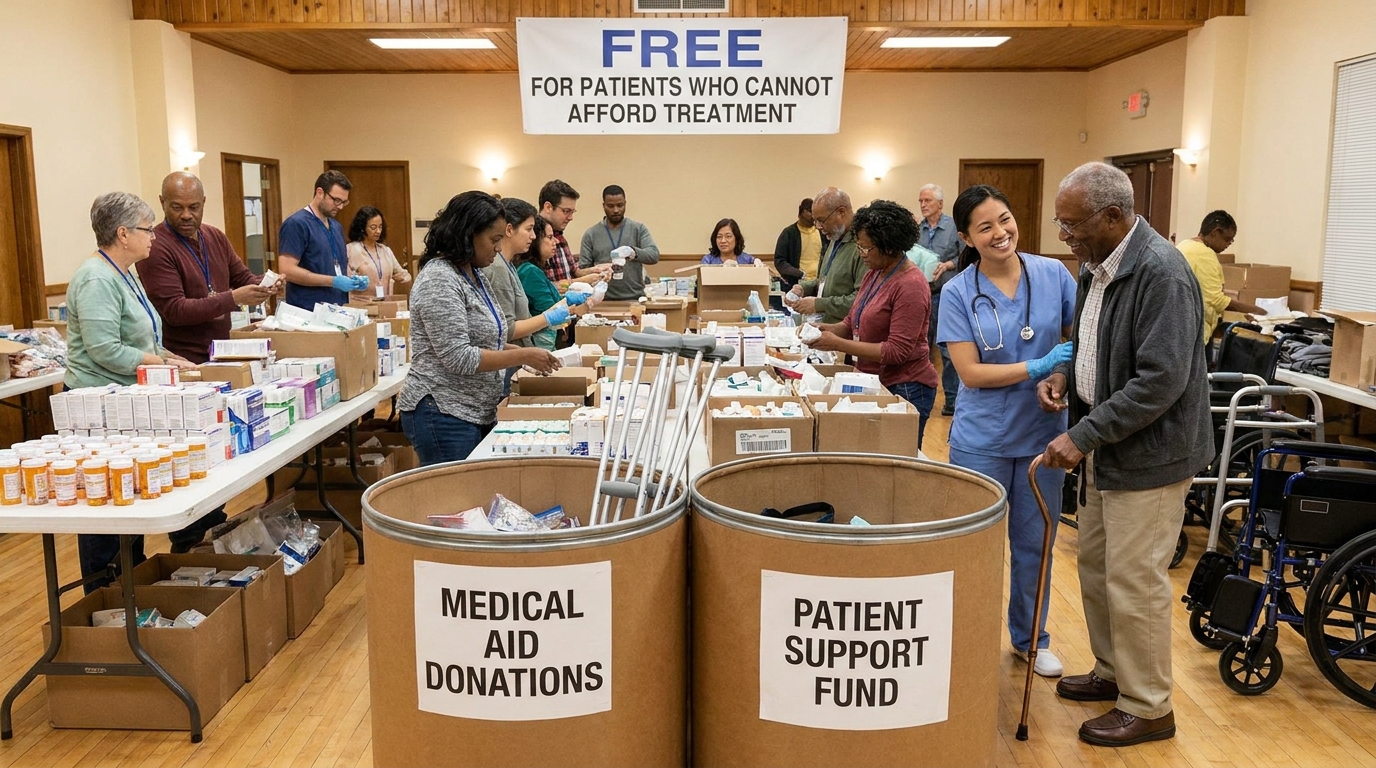
The global disparity in healthcare access presents a profound operational challenge for humanitarian efforts. For many people, an illness diagnosis leads to financial devastation that lingers for decades.
It is not just a healthcare issue, but also one that affects the entire fabric of life, economically and statistically. In nations where basic healthcare services are available, the cost of an ongoing course of treatment, or the use of necessary special equipment and procedures, can often be out of reach. It is a systemic obstacle that often consigns entire communities to continued poverty and suffering for years to come.
While governmental and several international large-scale aid organisations play an important role in this regard, the more specialised and focused medical aid donations of individuals and small philanthropic concerns are often the bridge to success. But to really understand what it takes to make a difference here, we need to understand the operational terms of aid deployment.
Beyond the Checkbook: The Mechanics of Medical Aid
Medical aid isn’t just payment for hospital bills. It’s a comprehensive package of physical and logistical assistance, whether it’s the provision of prostheses and walking aids for accident victims, or high-flow oxygen concentrators for chronic obstructive pulmonary disease sufferers. Or a set of diagnostic machines for remote clinics, or postoperative rehabilitation equipment for recovering patients.
Some specialised pieces of equipment can be costly to buy and run. For patients in developing countries, the low resale value of these items and the high purchase cost can mean that they are too expensive for most patients to afford. For donor agencies, donating a piece of specialised equipment, such as a dialysis machine, can require some planning. Before sending it to the clinic, they must determine if the clinic has consistent power, clean water, trained staff and the means to run regular maintenance.
Without those elements in place, even a high-quality donation can become a costly white elephant. Effective aid organisations take the time to survey the ground and to identify what measures are needed to make all aid sustainable. They include a financial aid package for running costs, diagnostic equipment that reflects local realities, and full staff training.
Targeting Impact: Addressing Specific Vulnerabilities
When making strategic decisions on the delivery of medical aid to some vulnerable populations, one must consider their multifaceted response to disaster. Look at an example of how to provide emergency care to widows in a number of developing countries. Many widows report the death of the head of the household, the loss of family resources, and the loss of social standing.
This leaves them and their children extremely exposed and vulnerable to medical challenges. Some of these conditions are immediate (resulting from injuries sustained during the conflict or other shock), while others will have been worsened due to stress and malnutrition. Many will not have access to maternal care, and the organisation providing emergency aid to widows will need to include psychosocial support and livelihood opportunities in their strategy.
Equally, there are specific conditions that make a particular type of medical aid more appropriate. For example, a donation for Muslims can be directed to an Islamic charity. These are based on the principles of Zakat or Sadaqah. The health campaign that would result would take into account the principles of the religion.
It would quickly gain the support of the local people; the health procedures would be culturally sensitive, with preference for female doctors. It would also take account of religious and dietary needs.
These are not simply forms of politeness, but are vital to the success of the health campaign itself. A broad-based health campaign may not work, but one channelled through trusted community leaders with a view to Islamic guidelines will.
Sorting out the Giving Logistics: Ensuring Your Giving Matters
For would-be donors, awareness of these operational intricacies is critical to making genuinely meaningful medical aid donations. This changes the nature of the donation. It transitions from being a straightforward humanitarian gesture to a well-considered philanthropic investment.
- It may be tempting to donate to a charity based on individual stories. Instead, explore the organisation’s long-term approach. How do they ensure ongoing impact? Are they helping build local capacity? This is far better than quick temporary relief.
- Sending out medical aid is a logistics nightmare, particularly in inaccessible or war-torn regions. Transparency about the supply chain is essential. Look into how the organisation manages customs. Investigate their last-mile logistics performance. If they have a transparent history in these fields, it can signify good logistics.
- When helping a focus on a needful crowd like emergency relief for widows, or a donation specifically for Muslims, make sure the NGO has culturally aware or linguistically suitable workers. And they are properly trained to understand the targeted community. This prevents adverse effects and alienating them.
- Think about backing groups that have programs in preventive care, health education or community health worker training. Preventing or managing an illness or chronic condition at an early stage means fewer resources will be needed in the future. Avoid higher-cost, acute health care and create a multiplying effect on your support.
- Demand financial transparency and accountability from organisations. Good organisations publish financial reports that are clear and easy to understand. Ask organisations for full, detailed financial reports that show how donations are spent and what impact has been achieved.
Making an Informed Investment in Health Equity
Supporting those who cannot afford medical help is one of the most compassionate acts you can take, and when paired with strategic planning, its impact becomes truly transformative. Donating to medical aid is a complex task. It can be varied and far-reaching. Moreover, logistics can be challenging; crucially, cultural idiosyncrasies can be even more so.
It’s important to understand that donating for medical aid extends beyond simple financial giving. Donors should look for charities and humanitarian organisations that have a strategic outlook, cultural awareness, and a strong track record of operational transparency.
This can help donors take the next step beyond giving. It makes sure that donors are investing in a healthier, more equal world, and that they are providing practical, sustainable support to the people who need it most.
 readymedicines
 genericwellness